Plan It. Protect It. Pass It Down.
You Don't Know Where to Start. That's Why You Still Don't Have a Trust.
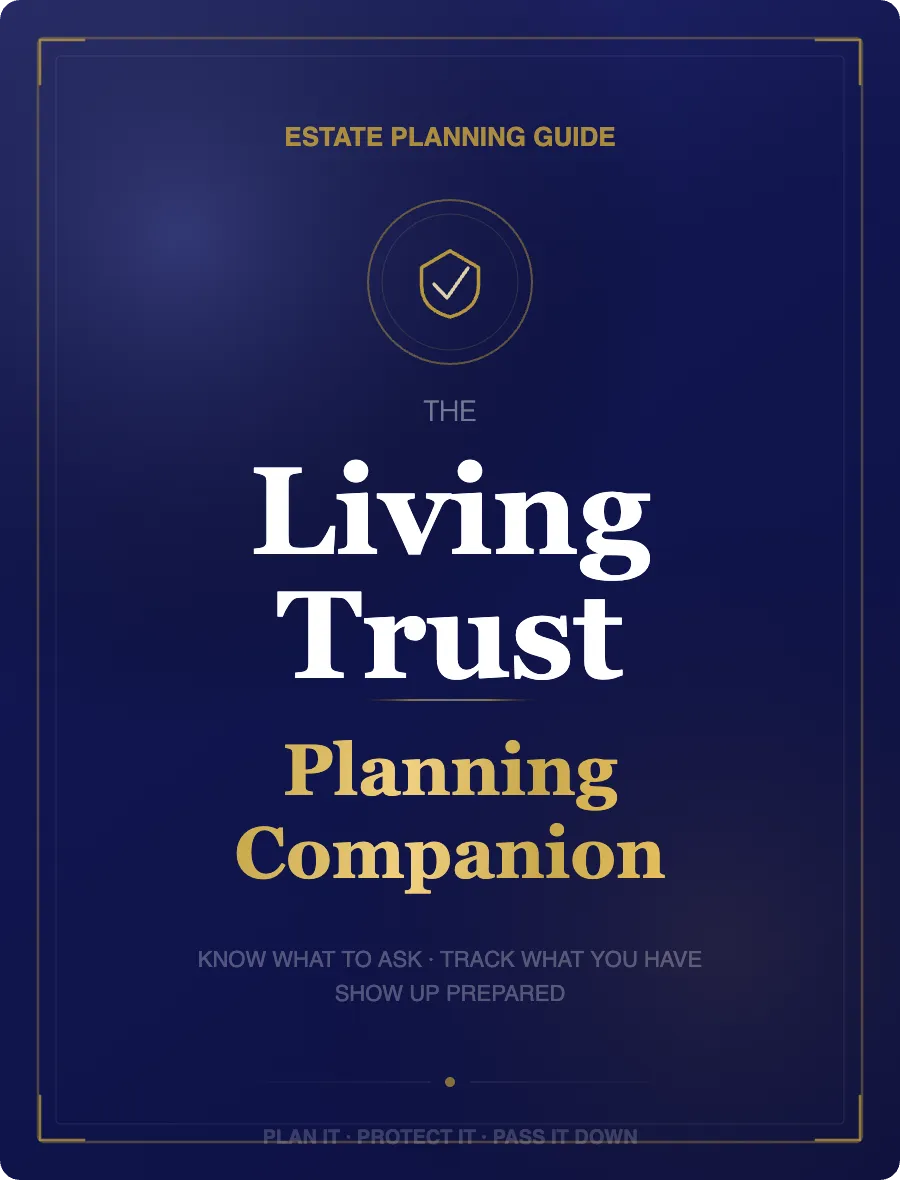
The Living Trust Planning Companion eliminates the guesswork so your first appointment actually counts.

Everyone tells you to get a living trust. Your accountant mentions it. Your friend who "got theirs done" makes it sound simple. But when you actually try to start, the weight hits immediately. Where do you even begin? What documents do you need? How do you organize years of scattered financial records?
Most people never get past this point. Not because they don't care. Because the process of getting started feels impossible. This guide was built to fix that.
12 questions to ask your estate planner
Complete asset inventory & funding tracker
Step-by-step guide for your successor trustee
The real cost isn't the trust.
It's the chaos of getting started.
The real cost isn't the trust. It's the chaos of getting started.
Think about what it actually takes to set up a living trust right now, without any guidance:
You need to gather documents scattered across years of your life: property deeds, bank statements, insurance policies, retirement account numbers, business records, vehicle titles. Some are in a filing cabinet. Some are in an email from 2019. Some you're not even sure you still have.
You need to organize information you have never had to put in one place before: every account you own, every property, every beneficiary, every person your family would need to contact if something happened to you.
Then you book an appointment with an estate planning attorney. You show up. And within ten minutes, they're asking questions you don't have answers to. What's the policy number on your life insurance? Is your rental property in an LLC? Who's the contingent beneficiary on your 401k?
You leave that first appointment with homework. You come back a second time. Maybe a third. Every visit costs money. Every delay leaves your family unprotected.
And while you're stuck in that cycle of frustration, your family has no plan. Your assets have no protection. If something happens to you tomorrow, everything you've built goes through probate: a public court process that can take 6 to 18 months and cost 3 to 8 percent of your total estate value.
WHAT'S INSIDE
Six sections.
Everything you need.
Built for anyone starting to think about protecting what they've built — whether you have a trust in place or haven't started yet.
01
THE RIGHT QUESTIONS
12 questions to bring to your estate planning attorney — so you walk in informed, not overwhelmed.
02
ASSET INVENTORY
A complete tracker for every asset — real estate, retirement accounts, digital assets, business interests, and more.
03
KEY CONTACTS
One place for every professional, trustee, and beneficiary your family will need when it matters most.
04
LIFE EVENTS LOG
An annual review system and life events tracker so your trust stays current as your life grows.
05
SPECIAL NEEDS PLANNING
Protect family members who receive government benefits — without disqualifying them from the programs they depend on.
06
LETTER OF INSTRUCTION
A step-by-step guide for your successor trustee — from the first 24 hours through the first year.
WHY THIS GUIDE
A plan that grows with your life.
Skip the confusion at the attorney's office
Walk in with the right questions and the right documents. Save time, save money, and make better decisions.
Protect your family from probate court
A living trust bypasses the court completely. Your family receives assets faster, privately, and without legal fees.
Give your successor trustee a clear roadmap
Section 6 walks them through every step — so the people you love aren't left guessing during the hardest time.
Keep your plan current as life changes
The annual review tracker and life events log mean your trust always reflects where you are — not just where you started.
"A trust without a complete asset inventory is like a map with missing roads. This guide makes sure nothing is missed."
FROM THE GUIDE
THIS GUIDE IS FOR YOU IF…
You own a home, a bank account, or assets you've worked to build
You have family who depends on you
You already have a trust but haven't reviewed it recently
You want to be organized before your first attorney appointment
Questions Before You Order
Is this a legal document?
No. This is a preparation and organization tool. It does not create a trust, provide legal advice, or replace an attorney. It makes sure you show up to that attorney meeting ready, not scrambling.
I don't have a lot of assets. Is this still for me?
If you have a bank account, a life insurance policy, or anyone who depends on you, you have something worth protecting. This guide helps you organize what you have, regardless of the total.
I already have a trust. Do I still need this?
If your trust hasn't been reviewed in the last 2 years, or if you've had any major life change, your trust may be incomplete. The check-in system and asset inventory alone will show you what's fallen out of date.
How is this different from a free checklist I can find online?
A checklist tells you what to bring. This guide tells you why it matters, walks you through how to gather it, and gives you a structured place to put everything. You bring this to every appointment and update it for the rest of your life.
Why is the process of setting up a trust so complicated?
It's not. The trust itself is straightforward. What's complicated is gathering years of financial information, organizing it, and knowing what questions to ask. That's exactly what this guide solves.
Limited time
Start protecting your family today.
It's Only $79.
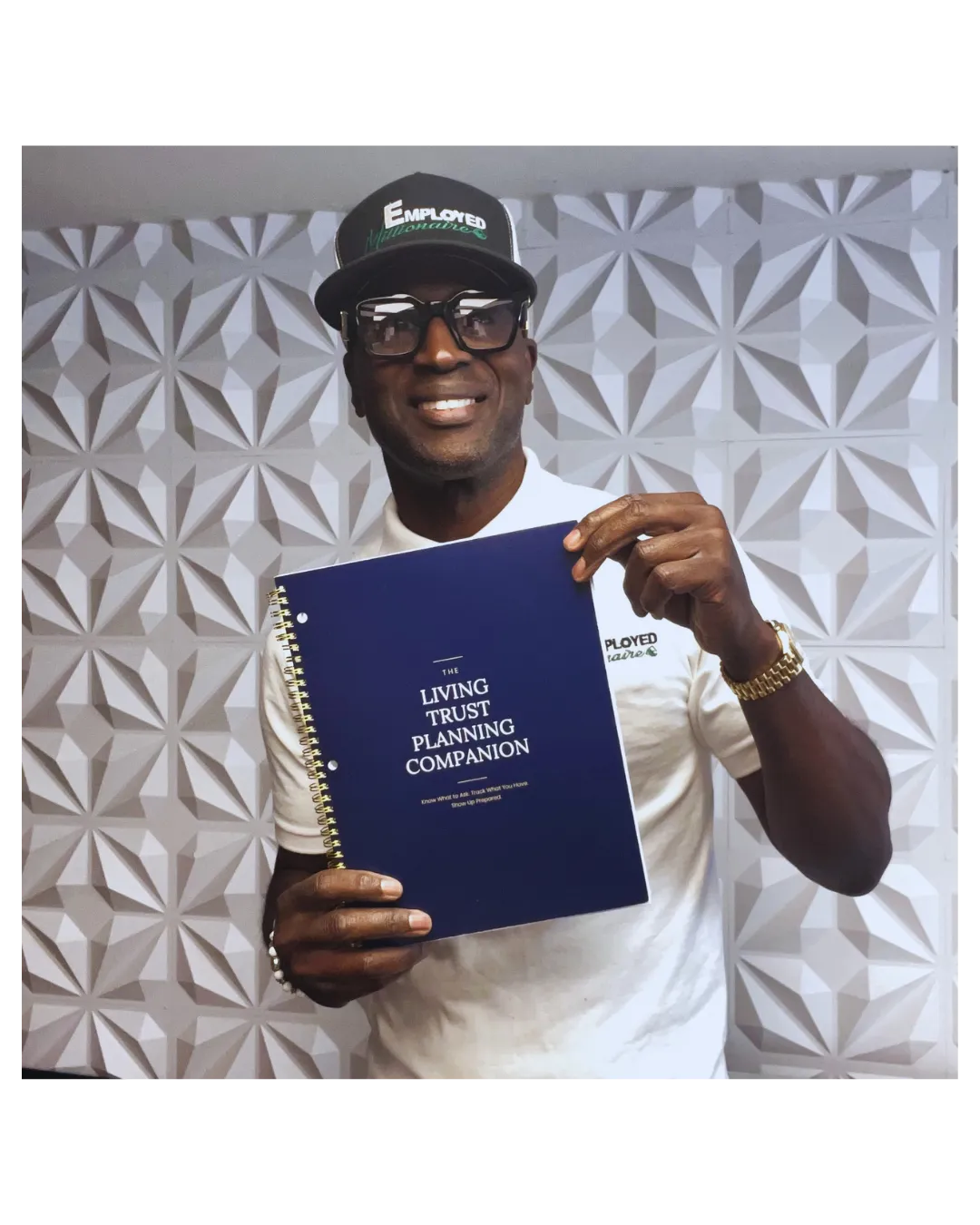
Get a paperback copy of The Living Trust Planning Companion and walk into your next estate planning conversation prepared, organized, and confident.
Plan It. Protect It. Pass It Down.
The Living Trust Planning Companion
© 2026 The Living Trust Planning Companion. All rights reserved.
This guide is an educational and organizational tool. It is not legal advice.